
Miami Dining Guide, illustrated
An illustrated 29-slide dining guide to Miami, as a flipbook.

A 30-slide playbook on interactive content, published as a flipbook.
A 30-slide playbook on interactive content: quizzes, calculators and assessments, and how they turn a visitor's question into a conversion.
It defines the formats, matches each to a buyer's question, and walks through the conversion journey and the value exchange. Five published cases are reviewed (Beardbrand, VenturePact, Get Paid for Your Pad, SmartBug Media and Leisa), with a note that published accounts offer ideas to test, not guarantees. Five tactics follow: a specific promise, better questions, a useful result, lead-capture placement and relevant follow-up.
The last third covers mobile usability and accessibility, distribution, measurement definitions, a worked conversion funnel, running a credible experiment, common failure modes and fixes, and a 30-day pilot.
Page 1. 01 / 30 The Interactive Content Playbook Case Studies & Conversion Secrets
Page 2. 02 / 30 The business opportunity A visitor brings a question. Your content can help answer it. The experience Ask for input and return a recommendation, estimate or useful diagnosis. The business goal Help visitors make a decision, then measure the next meaningful action. Opening discussion What question do buyers repeatedly ask before they purchase?
Page 3. 03 / 30 A working definition Quiz Matches a visitor with an option or recommendation. Calculator Estimates a cost, potential benefit or requirement. Assessment Identifies strengths and gaps using stated criteria. Guided demo Shows a relevant scenario based on visitor choices. The format needs to return something useful to the visitor.
Page 4. 04 / 30 The buyer’s question Buyer question Suitable format Which option fits me? Recommendation quiz What could this cost or save? Calculator Where do I need help? Assessment How would this work for me? Guided demo
Page 5. 05 / 30 The conversion journey 01 Entry and start Does the promise attract the intended visitor? 02 Completion and result Can the visitor finish and understand the answer? 03 Next action Does the result make the offered next step relevant? 04 Qualified outcome Does the campaign produce suitable leads or customers?
Page 6. 06 / 30 The value exchange A clear promise makes the effort worthwhile. Promise State the result and disclose the effort honestly. Questions Collect only inputs that improve the result or routing. Delivery Give useful guidance and an optional next action. Pilot suggestion: 5 questions, 3 outcomes, 1 primary CTA. Test this scope.
Page 7. 07 / 30 Five cases and their evidence Published accounts offer ideas to test. Evidence These are customer and vendor reports, not controlled experiments. Interpretation Conversion definitions and reporting windows differ. Lead counts do not equal customers. Application Borrow a useful mechanism, then measure its effect in your own campaign.
Page 8. 08 / 30 Beardbrand: personality and product fit ~150,000 quiz takers, reported by the founder Experience Ten questions, six personality outcomes and product links on custom result pages. Next action Optional newsletter signup and products connected to the result. Headline says “leads.” Founder says “quiz takers.” No sales lift established. Source: typeform.com/blog/beardbrand - personality - quiz
Page 9. 09 / 30 A retailer quiz adaptation Illustrative concept: a home - office setup finder Inputs Workspace size, daily usage, budget and comfort priorities. Result A suggested setup, reasons it fits and a lower - cost alternative. CTA View the matching collection. Test Compare qualified purchase rate with a generic category page. Hypothesis to test. No expected conversion lift assumed.
Page 10. 10 / 30 VenturePact: an app cost estimate A calculator answered an early planning question. Experience Nine app - planning questions returned a cost estimate and an onward CTA. Reported result Vendor reports a 28% conversion - rate increase within two weeks. Limit The source does not clarify relative lift versus percentage points. Lead totals differ. Interpretation: estimate a cost buyers already need to understand. Source: outgrow.co/case - studies/
Page 11. 11 / 30 Calculator economics $5,400 modeled net annual value before implementation Gross labor value 20 hours/month × $35/hour × 12 months = $8,400. Annual fee Subtract $3,000 to reach $5,400. Important assumption Value requires actual time reduction or useful redeployment. Illustrative example. Editable assumptions, not a savings guarantee.
Page 12. 12 / 30 Get Paid for Your Pad: a listing assessment 60% completion rate reported by Outgrow Experience Nine questions assessed an Airbnb listing, with a form before results. Reporting limit Conversion figures vary across the page: 37%, 40% and 41%. Interpretation: a diagnosis can make follow - up more relevant. Source: outgrow.co/case - studies/
Page 13. 13 / 30 An assessment result people can use 12/20 illustrative process score Criteria Intake, handoffs, visibility and follow - up. Explanation Identify one strength, one priority and a concrete improvement. Next step Offer an action checklist and optional consultation. Example scoring only. This is not a validated diagnostic.
Page 14. 14 / 30 SmartBug Media: relevant questions and routing +40% form completions reported by Typeform Experience Conditional questions adapted the contact form to inquiry type. Follow - up HubSpot routing helped send each request to the right team. Reported result Lead follow - up times fell 24%. Observational vendor account. No controlled causal comparison. Source: typeform.com/blog/smartbug - increased - sales - leads - 40 - percent - typeform
Page 15. 15 / 30 Branching and routing Inquiry Relevant input Destination Prospective buyer Service interest Sales Existing client Account reference Support Media request Topic and deadline Communications The confirmation and next action should match the branch.
Page 16. 16 / 30 Leisa: outcome - based coaching follow - up 20,000 leads reported in an Interact interview Experience Seven quiz outcomes supported tailored email paths. Quality check About 40% of contacts were unengaged and removed. Cost context Reported Facebook cost: $0.21 per lead. Historic, not a current benchmark. Source: tryinteract.com/blog/quiz - case - study - 20000 - leads - with - a - quiz/
Page 17. 17 / 30 What the cases suggest The useful result connects the experience to the offer. Buyer utility Answer a question the visitor already cares about. Personal relevance Explain how the inputs shaped the result. Commercial fit Offer the appropriate product, resource or conversation. Quality Measure what happens after lead capture. These mechanisms are interpretations to test, not guaranteed effects.
Page 18. 18 / 30 Tactic 1: a specific promise The visitor should know what they will receive. Vague “Discover your potential.” Specific example “Find a payroll workflow for your team in five questions.” Credible effort Publish a time estimate only after observing real users.
Page 19. 19 / 30 Tactic 2: better questions Clarity One idea per question. Use the visitor’s familiar language. Choices Provide relevant options and an “unsure” path. Restraint Remove inputs that change neither the result nor routing. Testing Ask representative users to explain each question in their own words. Avoid forced sensitive disclosures.
Page 20. 20 / 30 Tactic 3: a useful result The recommendation needs an explanation. What fits Name the recommended option and why it fits the answers. What to consider Show assumptions, limitations and a suitable alternative. What happens next Give a practical action tied to the recommendation. Example CTA: “See the plan for your hiring volume.”
Page 21. 21 / 30 Tactic 4: lead capture placement Approach Tradeoff to test Result first, optional email More immediate value, potentially fewer emails Preview, email for full report Useful preview with a clear exchange Required email disclosed at entry Clear gate, potentially more abandonment Compare qualified outcomes per visitor. Separate marketing opt - in from delivery.
Page 22. 22 / 30 Tactic 5: relevant follow - up Immediate delivery Send the promised result when the visitor requests it. Useful example Share an example tied to the stated need or outcome. Appropriate offer Invite the visitor to the relevant consultation or product. Example sequence. Test timing, honor opt - outs and disclose automation honestly.
Page 23. 23 / 30 Mobile usability and accessibility Controls Use clear labels and large, usable touch targets. Navigation Support keyboard input and visible focus. Understanding Use sufficient contrast and clear error messages. Verification Test complete paths on phones and with assistive technology. Essential interactions need an alternative to hovering.
Page 24. 24 / 30 Distribution with buyer intent Put the experience where the relevant question arises. Existing traffic Related website pages, useful email and partner campaigns. New traffic Search - focused content or ads that match the promised result. Measurement Record campaign source and device. Scaling Expand only after checking quality and economics.
Page 25. 25 / 30 Measurement definitions Metric Definition Start rate Starts ÷ eligible visitors Completion rate Completions ÷ starts Lead rate Valid opted - in leads ÷ eligible visitors Qualified outcome rate Qualified outcomes ÷ eligible visitors Customer acquisition cost Attributable spend ÷ new customers Define deduplication, qualification and attribution window before launch.
Page 26. 26 / 30 A worked conversion funnel Stage Count Rate and denominator Eligible visitors 10,000 Baseline Starts 4,000 40% of visitors Completions 2,800 70% of starts Opted - in leads 1,120 11.2% of visitors Qualified leads 224 2.24% of visitors Customers 28 0.28% of visitors Illustrative: $5,600 attributable campaign cost ÷ 28 customers = $200/customer.
Page 27. 27 / 30 A credible experiment Assignment Randomly assign eligible visitors to current or interactive experience. Comparison Keep the offer, source mix and timing comparable. Primary metric Use qualified outcomes per visitor. Track quality, errors and cost. Decision Predefine sample needs and duration. Report uncertainty. A first favorable result is not a reason to end the experiment.
Page 28. 28 / 30 Failure modes and fixes Observed problem First area to investigate Few starts Promise, placement or traffic relevance Question drop - off Comprehension, relevance or effort Many leads, low qualification Targeting or capture incentives Qualified leads, few sales Offer fit, handoff or follow - up Use data and user feedback before redesigning.
Page 29. 29 / 30 The 30 - day pilot Week 1 Define Choose the buyer question, owner, baseline and target outcome. Week 2 Build Create a short experience, explainable results and next actions. Week 3 Verify and launch Test paths, tracking, delivery and access. Start a limited trial. Week 4 Review Check quality and economics. Continue, revise or stop. Thirty days structures the work. It does not guarantee statistical significance.
Page 30. 30 / 30 Your next campaign starts with a buyer’s question Choose one question. Build one useful result. Assign an owner, a qualified - outcome metric and a review date.
Page 31. Flipbook IQ Make your own flipbook. Turn a PDF, Word file or PowerPoint into a flipbook that opens from one link. Free to start. Scan, or go to flipbookiq.com/app Beautiful Flipbooks. Bigger Impact.
An illustrated 29-slide dining guide to Miami, as a flipbook.
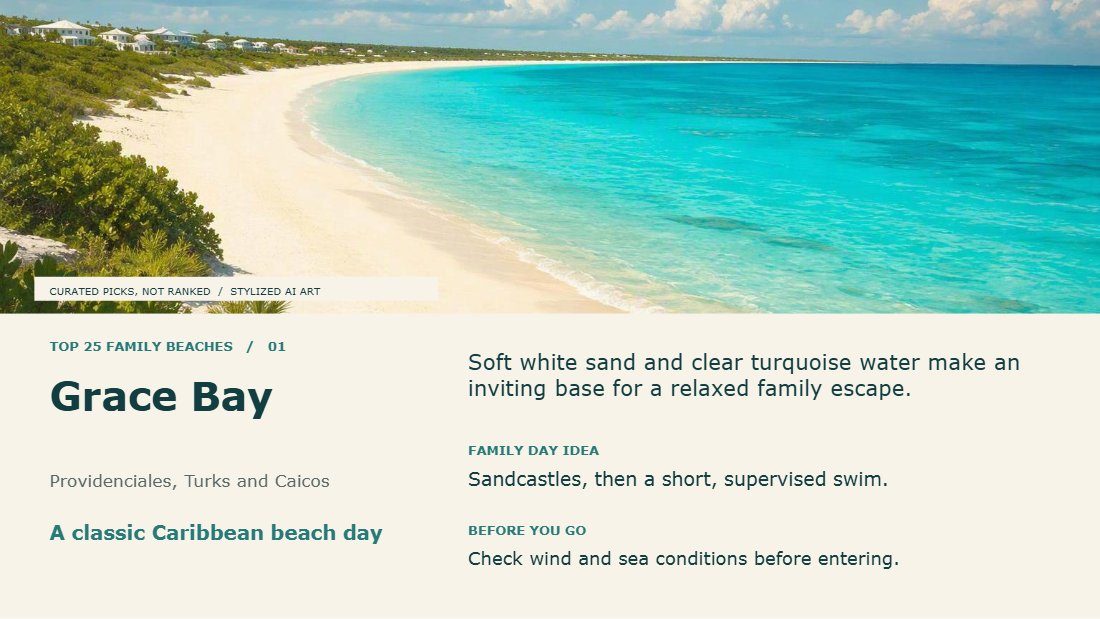
A 25-slide presentation of family beaches worldwide, as a flipbook.
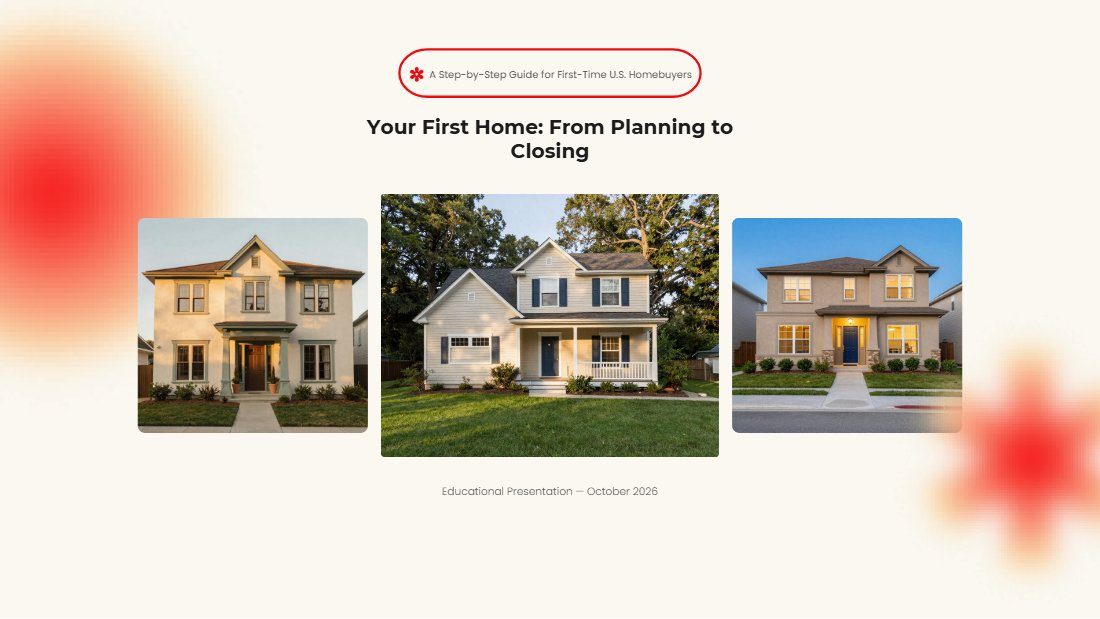
A 22-slide first-time home buyer presentation, published as a flipbook.
This was made with FlipbookIQ. Drop in a PDF, or start from Word or PowerPoint, and share a page-turning flipbook with one link, a QR code or an embed. Free to start. No card, no download.
© 2026 Kixlogic, LLC. All rights reserved. You are welcome to read this flipbook, link to it and share this page. Copying, reposting or selling its contents is not allowed. To ask for permission, or to report a problem, contact us.
Free to browse
Read page-turning flipbooks made with FlipbookIQ, share them, and get ideas for your own. Tell us who you are and you are in.